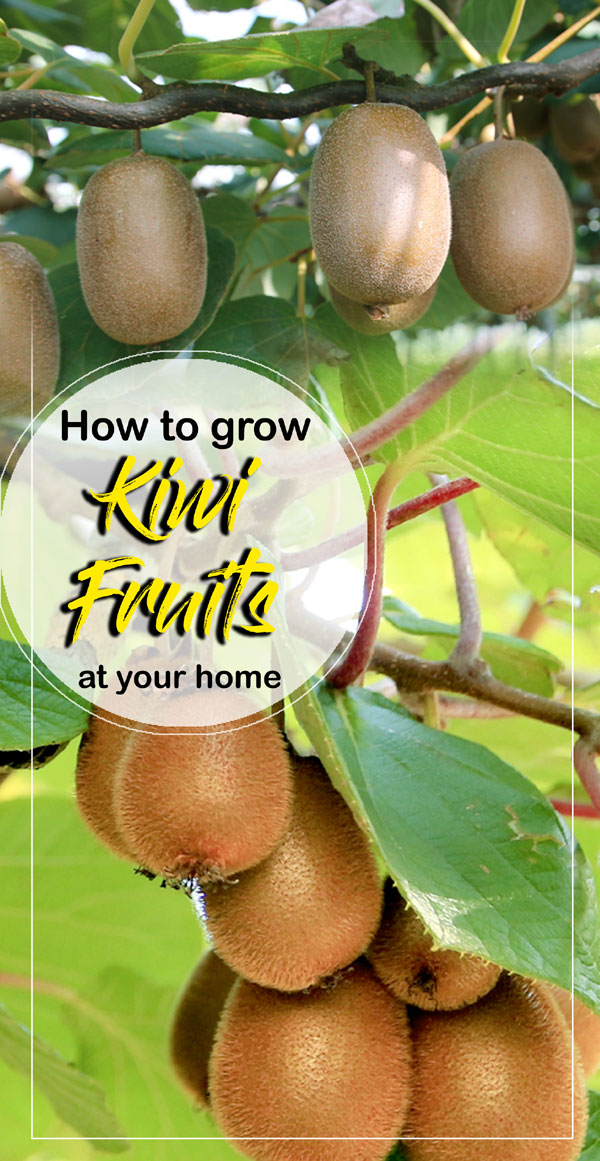

Kiwi fruit is popular and is full of health properties. Actinidia arguta fruit grows on the vines in the temperate regions. Each vine produces hundreds of pounds of fruit, but this plant usually begins to reach maturity in three to seven years.
To develop Kiwi fruits plant, there is a need for mild winters or long periods of frost-free weather. You can grow hardy kiwi plants in cooler areas, in which you select a variety that has adapted to the cooler climate. There are some such Hardy Kiwi plants, and they are performing well in these areas.
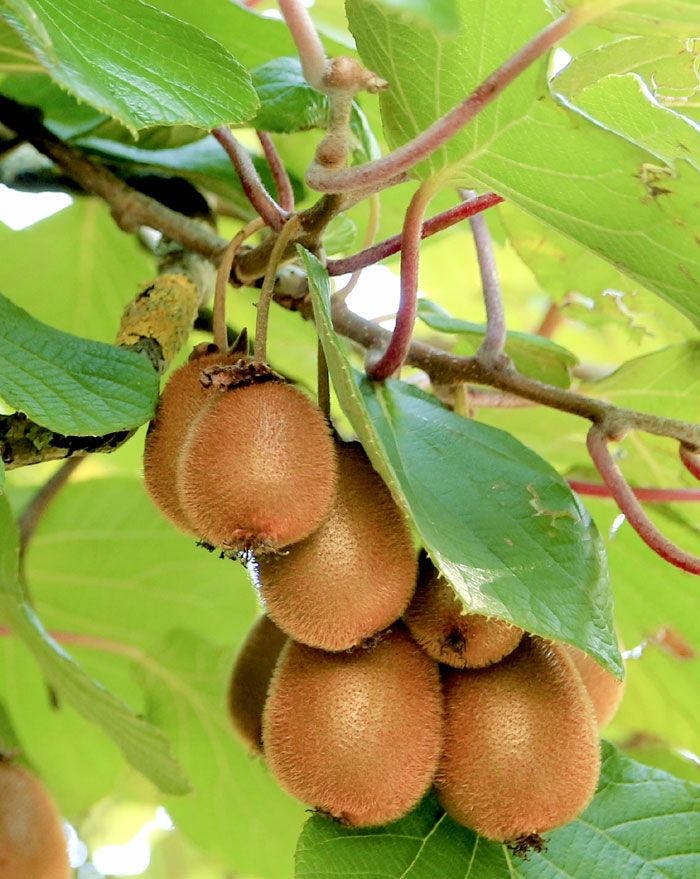
Overview
Scientific name Actinidia arguta
Common name Kiwi fruit
Plant Fruit plant
Sun required Full Sun or Partial shade
Soil Fertile, well-drained soil
Soil pH 5.5-7.0
Harvest time September-October
Planting time Late autumn to early spring
Zone 5-9
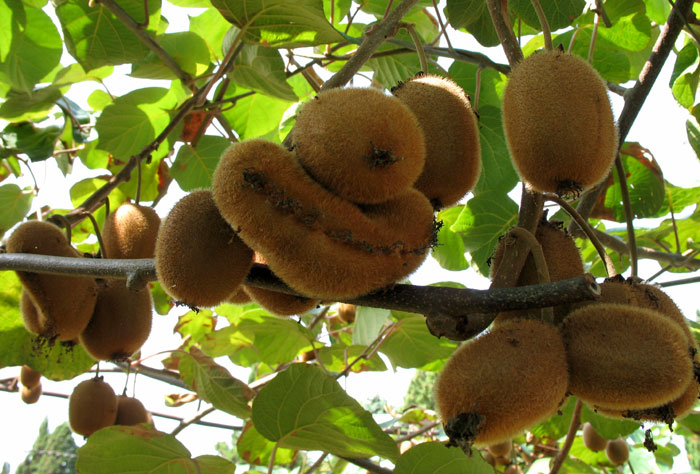
Growing Kiwi fruits
Soil and location
Kiwi vines grow very well in full Sun or partial shade. They like fertile, good, and well-drained soil with a pH level of 5.0-7.5.
Propagation
There are several easy ways of spreading that you can use to develop new plants. For this, softwood can be propagated by cutting, budding, seed, or grafting. On developing by seed, you have the possibility of something very different than the parent plants. That’s why other methods are much better.
Pollination
The Kiwi Plant is dioecious. For proper pollination, you should have a male kiwi vine with a female kiwi vine in an area of about 40-50 feet. A single male plant of kiwi vine can pollinate many female plants. Hand pollination is the second option, which allows a limited number of plants to be pollinated. For this, you will have to rub in with a single male and female flower.
Fertilizer
Give these plants the slow-release fertilization, because the roots of the kiwi vine are sensitive to fertilizer. Apply an all-purpose slow-release fertilizer at planting time. After feeding in the first year, fertilize your plant in early spring and after flowering fades in summer. Organic manure is a good choice; you will get good results. Read more.
Watering
During the growing season, kiwi plants require large amounts of water, but the soil should be well-drained. Do your plants get regular water during the summer or dry? Do not allow plants to be affected by dry or stress. If the stress is constant, breakage of leaves, brownish discoloration around the edges of leaves are visible.
Growing kiwi from seed
- Remove the seeds from the mature Kiwi fruits.
- Put Kiwi seeds and water in a small bowl so that the sticky membrane from the seeds separates from the surface.
- Use the colander and wash the seed thoroughly.
- Place the seeds on a paper towel, and put them in a zippy plastic bag.
- Keep this packet in a warm place.
- Regularly check this until the seed sprouts. Keep in mind that paper towels are moist all the time, if not, then mildly mist.
- According to the germination, bind them in small pieces, and plant a couple of the sprouted seedlings in the small containers.
Kiwi plants Care
- In the late winter, keep the content of organic manure or well-rotted manure fertilizers on the plants on all sides. Keep it a little distance from the stem, which does not come in contact with the stem, otherwise, it can cause plant rot.
- Feed your plant general-purpose fertilizer at the beginning of spring.
- During the growing season, give water in the required amount to maintain moisture in the soil. Give regular water to the hot dry season or water two or three times per week.
- To control pests, a pesticide soap can be used during the growing season.
- Train the vines with a strong fence or trellis for best production.
Take special care of these things
- Dig a big hole for planting, in which the root can easily be adjusted. Kelp meal and slow-speed fertilizer can be combined with soil in the planting hole.
- Potted plants should be planted carefully; roots should not be disturbed.
- Kiwi vines should be separated 10 feet apart, and they should be trained to grow in the opposite direction. In addition to pollination, male and female plants can be up to 35 feet apart for pollination.
- Flowers are pollinated by bees, but can provide the nectar for attraction. When your vine has flowers, it is best to remove competing flowers around the vines. Read more.
Pruning
Pruning is necessary for the Kiwi vine; for this, sorting is the most challenging task. Shortening the vines with the help of a sharp knife, when the plant remains dormant in winter, it can be pruned 2-3 times in the summer season. You can leave any branch that produces fruit from last season.
In the summer, you can trim any long and arching vines in pruning, which will not produce fruit. You can also remove non-flowering vines.
Harvesting
Generally, mature (in the ripening stage) kiwi fruits should be harvested before the first frost. Place these fruits in the basket with other ripe fruits; this fruit will ripen in a few weeks. In the fridge, you can store it in a pierced plastic bag for up to three months.
Pests and diseases of Kiwi fruit
Root rot is a common disease of kiwi plants, which causes more soggy soil To get rid of, there should be better drainage in the soil. Botrytis fruit rot is also called gray mold, due to which the mature kiwi fruit becomes soft and shrinks, it is most visible on the edge of the stem. This is the most common disease during the period of high humidity.
Occasionally these plants become troubled by a bacterial disease. There is no chemical use to avoid this. Protect the vines from injuries. Yellow and brown petals, and spots on buds are the symptoms of bacterial blight, which is a disease and enters the plant through injured vines.
You can use a fungicide for fungal diseases, but it is effective in the beginning, it becomes difficult to control bacterial diseases when the problem is high. Read more.
Health benefits of Kiwi fruits
Kiwi is a powerhouse of many vitamins and minerals like vitamin A, vitamin B6, vitamin B12, vitamin E, and vitamin C, and essential minerals like zinc, potassium, sodium, copper, magnesium, calcium, and iron, not only this it contains an ample amount of anti-oxidants, anti-fungal, anti-bacterial properties also.
One kiwi per day helps
Boosts immunity• Reduces stress, Bringing a natural glow to your skin• Prevents hair loss• Increases blood platelets and RBC’s, Improves eyesight• Cures heart problems• Cures kidney stone• Lowers blood pressure• Reduces bad cholesterol• Improves digestion • Induces sleep• Cure stomach related problems• Helps in children growth• Helps to develop a strong and healthy fetus• Increase platelets • Fight bacteria causing viral fever and dengue fever. Read more.
Read also: How to grow Rosemary herb plant. Growing Irises flowers. How to grow Fuchsia plant in containers. Growing Organic Bottle Gourds. Calendula Flowers growing and caring guide. Fiddle leaf fig growing in containers. Growing Gerbera in containers. Okra growing, planting information guide. Tomatoes growing and caring guide. Eggplants growing and caring guide. Grapefruit tree (Pomelo) Growing and care tips.
Happy gardening
For pin